Thing Two
Mr. MercedesThing Two is a homemade radio-signal capture device that Brady Hartsfield turns from a car-theft tool into the electrical trigger for a bomb. Its importance lies in the chain of consequences it sets in motion: stealing passive-keyless-entry codes helps Brady get Olivia Trelawney’s Mercedes, the car used in the City Center Massacre, and the same gadget later arms the wheelchair bomb he takes to Mingo Auditorium. There, its exposed toggle and yellow ready-light become the focus of a split-second struggle, and Holly Gibney stops the device by removing a battery.
Design and Operation
Thing Two exploits passive keyless entry, or PKE: when a driver presses a key fob, the fob emits a low-frequency radio signal carrying a code. Jerome Robinson explains that a modified garage-door opener or television remote could capture such a signal at close range, while a more powerful homemade unit—assembled from readily available electronics components for about a hundred dollars—could reach as far as a hundred yards. Brady’s device captures and stores the code; after the driver has walked away, Brady can transmit it to unlock the car.
The method is not infallible. Manufacturers have made PKE systems harder to defeat by changing the signal each time the fob is used, but Jerome says that this does not make them impossible to hack. Brady, too, knows the gadget can fail: sometimes its green light flashes but the car stays locked, apparently because of a random glitch in the program or microchip. That uncertainty makes the device more than a convenient key. Its operation depends on timing, proximity, and a successful electronic exchange, and Brady’s plans repeatedly depend on whether that exchange works.
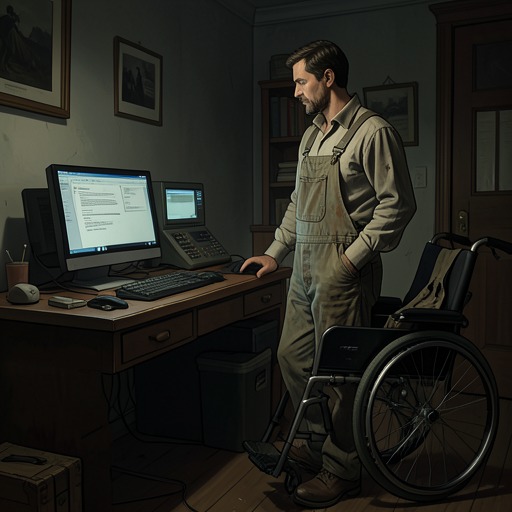
Thing Two is small enough to resemble a customized television remote control. At the Mingo, its visible features are stark: a white toggle switch, a wire running from the unit, and a yellow ready-light. In its final use, the device is connected to a master wire leading to the explosive in Brady’s wheelchair. Switching it on makes the yellow lamp glow; pressing the toggle is meant to send electricity to the detonators. The same portable object thus carries two different forms of access: first, entry into locked cars; later, the threatened release of a bomb.
Theft and the Mercedes
Brady uses Thing Two for nearly two years to capture PKE codes, enter cars, and take valuables and cash. The proceeds are uneven, but the work’s excitement persists. Thing Two is the only one of his gadgets that becomes a moneymaker, and Brady regards it as indispensable to the sequence that follows: without it, he thinks, there would have been no Mercedes and therefore no City Center Massacre.
The Mercedes theft is the turning point in the device’s criminal history. Brady finds a spare key in the glove compartment, inside a plastic bag with the owner’s manual and registration. His first impulse is to take the car for a joyride and damage it, but he leaves it intact, sensing that it could serve a larger purpose. That restraint converts a routine theft opportunity into an instrument of mass violence. The car’s significance is not separate from the gadget: Thing Two’s code capture gives Brady access to the vehicle, while his decision not to vandalize it preserves its usefulness.
Later, Brady puts the device back into service against Hodges. From a parking garage roughly sixty yards from Hodges’s Toyota, with no obstruction between them, he judges the range sufficient. When Hodges operates his key fob, Brady aims Thing Two and captures the car’s PKE code; the Toyota’s lights flash, and the gadget’s green lamp blinks to confirm that the code has been stored. The act revives a line of inquiry for Hodges, who recognizes that Brady may have used similar devices before the Mercedes and considers checking downtown car-robbery reports from 2007 through early spring 2009.
Brady then uses the captured code to open Hodges’s Toyota at the funeral home. He hides behind a hearse, transmits the signal, and sees the headlights flash. After placing a shoebox inside the car, he remembers to lock it again, using Thing Two once more to make the locks re-engage. The device enables both the intrusion and the effort to leave the car apparently secure, extending its role from theft to a covert delivery connected to Brady’s attack on Hodges.
From Car Key to Detonator
For the planned attack at Mingo Auditorium, Brady repurposes Thing Two as the wheelchair bomb’s detonator. The explosive is packed into the chair, with wires gathered into a master lead; Brady identifies the gadget as the actual trigger. He connects the master wire to it and switches on the power. The yellow ready-light comes on, confirming that the device is active, while the bomb remains dependent on the toggle and the electrical circuit completing as intended.
Brady’s plan is crude and exposed. A wire can be noticed, and a cursory look into the wheelchair’s storage pockets could reveal the explosives. The auditorium’s no-bags, no-boxes, and no-backpacks rule does not by itself exclude the chair, but the security checkpoint still threatens to uncover the bomb. Brady imagines triggering it if a guard inspects the chair, and the gadget’s toggle is positioned so that pressure on a framed picture in his lap will activate it. The earlier usefulness of Thing Two depended on remaining unnoticed near a car; now Brady carries it openly into a crowded venue, relying on concealment and the confusion of the checkpoint.
The device’s ordinary-looking form becomes critical when the plan is interrupted. During the struggle, Jerome holds Brady’s hands while Holly examines the gadget. She sees the yellow lamp and white toggle but cannot tell which direction means off and which means detonation. Rather than risk moving the switch, she turns Thing Two over, removes its battery cover, and works a fingernail beneath one of the two AA batteries. Brady’s hand slips free and strikes her, but the battery pops out. The lamp goes dark; Holly then pulls the master wire from the device. The immediate danger ends without the toggle being pressed.
Narrative Significance
Thing Two links small-scale criminal opportunism to Brady’s larger violence through a concrete chain of access and reuse. A signal-capturing tool lets him enter cars, and his handling of the Mercedes helps preserve the vehicle for the City Center attack. Later, the same method gives him a way into Hodges’s Toyota and supports a new stage of his plan. Its functions accumulate rather than replace one another: each successful use makes the device more consequential, until it is no longer merely a means of opening someone else’s property but the point at which a mass-casualty plan can be switched on.
The device also concentrates the story’s tension between technical control and material vulnerability. Brady trusts it because it has worked before, yet he remembers glitches, and its final circuit depends on ordinary components: a toggle, a wire, a battery compartment, and two AA batteries. At the climax, the exposed object ceases to be an invisible instrument of access and becomes something Holly can hold, inspect, and disrupt. Its power is real but conditional; the bomb is stopped not by reversing the toggle or mastering the technology, but by removing one battery and breaking the connection. The transition from remote control to physical intervention gives Thing Two its decisive narrative reversal: the gadget that has repeatedly opened paths for Brady becomes the mechanism through which his plan can be interrupted.